 English
English
English
Compressed air leaks accurs throughout industrial facilities. Industry estimates show that 20 to 30% of compressed air in a typical plant never reaches the intended tool, cylinder, or process.
A compressed air flow meter shows exactly how much air is moving through your system, highlights consumption spikes, and reveals hidden losses. For energy managers and procurement teams facing high utility costs, this data can pay for the meter in just months.With consumption data by zone, Flow metering enable you to identify inefficiencies, support energy-saving projects, and allocate costs across production lines more accurately.
A typical example comes from a mid-size automotive components plant, where thermal mass flow meters installed on three main headers revealed a single zone consuming 40% more air than expected. The issue was traced to aging copper pipe and fixed for under $800, delivering annual energy savings of approximately $14,000.
There are mainly four types of flow meters used for compressed air measurement, each with distinct trade-offs in accuracy, installation complexity, and cost. If you are choosing between types, for example between thermal and ultrasonic, here's what matters in practice.
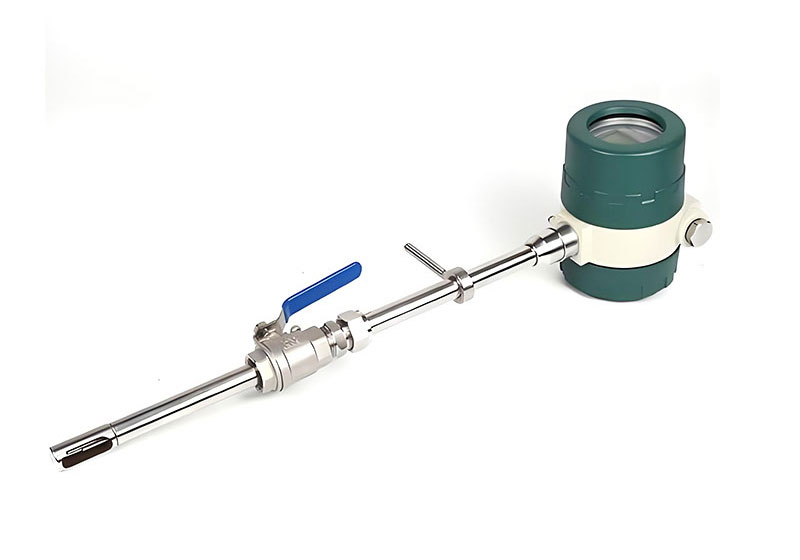
Thermal mass flow meters are the most widely deployed technology for compressed air monitoring. They measure mass flow directly without separate pressure or temperature compensation, reducing correction errors in everyday operation.
Best for: Continuous system monitoring, energy management programs, sub-metering by production zone, and leak quantification.
Ultrasonic flow meters use transit-time measurement, it sends acoustic signals across the pipe and calculating flow velocity from the difference in travel time. Nothing touches the gas stream, so there's no pressure drop and virtually no maintenance burden once installed.
Best for: Large pipeline monitoring, non-intrusive retrofit projects, bidirectional flow measurement, and applications where zero pressure drop is a hard requirement.
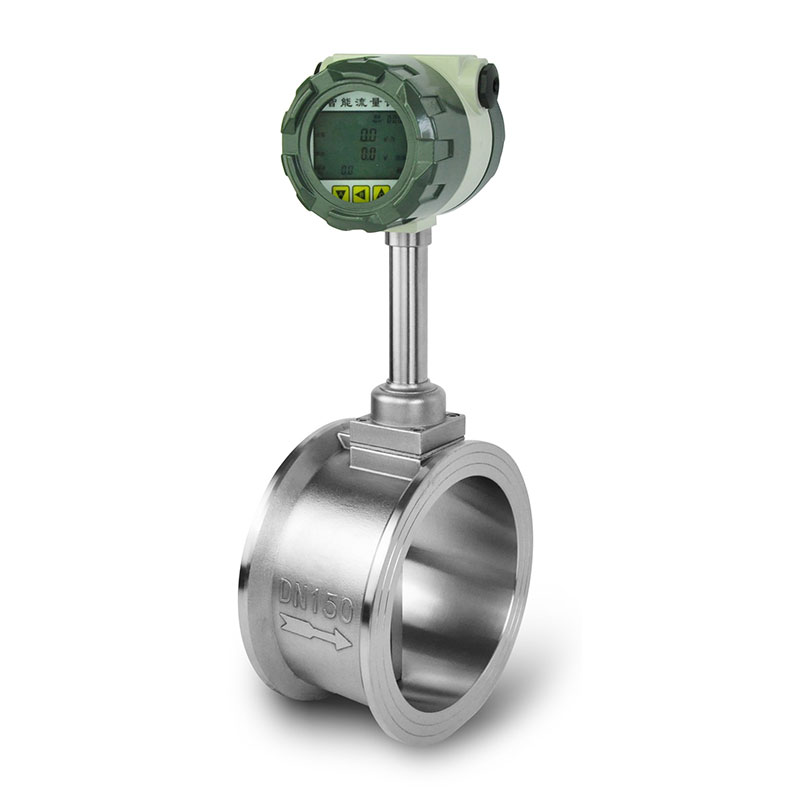
Vortex flow meters place a bluff body in the flow path and count the vortices shed downstream. The vortex frequency is proportional to velocity, giving a reading that's inherently stable under varying pressure and temperature.
Best for: Industrial process control with steady flow rates, contaminated environments where ultrasonic isn't suitable, and systems requiring long-term stability with minimal recalibration.
Differential pressure meters of orifice plates, venturi tubes, or flow nozzles are the oldest technology in this category. They measure the pressure drop across a fixed restriction; flow is then calculated from that differential.
Best for: Applications with limited budgets, simple flow logging, and applications where existing pipe infrastructure already suits the installation requirements.
| Type | Typical accuracy | Pressure drop | Maintenance | Relative cost | Best for |
|---|---|---|---|---|---|
| Thermal mass | ±1–2% | Minimal | Low | $$ | Energy monitoring, leak detection, sub-metering |
| Ultrasonic | ±1–1.5% | None | Very low | $$$ | Large mains, retrofit, non-intrusive measurement |
| Vortex | ±1–2% | Moderate | Medium | $$ | Stable process flows, contaminated environments |
| Differential pressure | ±2–3% | High | Medium | $ | Basic monitoring, cost-sensitive projects |
Compressed air flow measurement varies by industry, depending on process sensitivity and air usage patterns.
Manufacturing & Automation
Air demand changes with shifts, products, and equipment condition. Zone metering links consumption spikes directly to equipment issues instead of waiting for utility bills.
Food & Beverage
Compressed air in contact with products must meet ISO 8573 purity standards. Flow measurement helps verify filtration and drying performance and supports audit documentation.
Pharmaceuticals & Cleanrooms
This is a critical application. Stable pressure and flow are required for fill accuracy, particulate control, and batch consistency. Metering is required for GMP compliance and validation.
Electronics & Semiconductor
High sensitivity to contamination and tight flow tolerances make meter selection critical. Insertion meters with smooth bore design are preferred to minimize turbulence.
Automotive
High-duty cycle systems are sensitive to small pressure losses. Even a 5% drop can affect tool performance and product quality. Flow monitoring provides early detection of system drift.
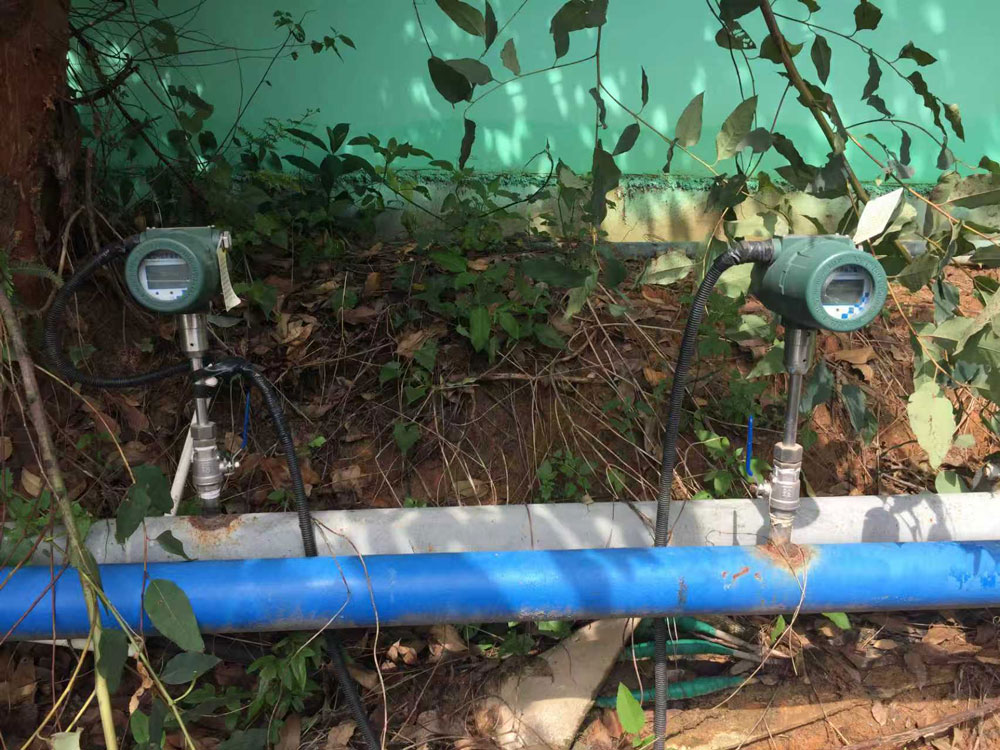
Most flow meter installation issues come from three factors: turbulence, contamination, and wiring. If any of these are not properly managed, readings can become unstable and difficult to troubleshoot.
Straight Pipe Runs
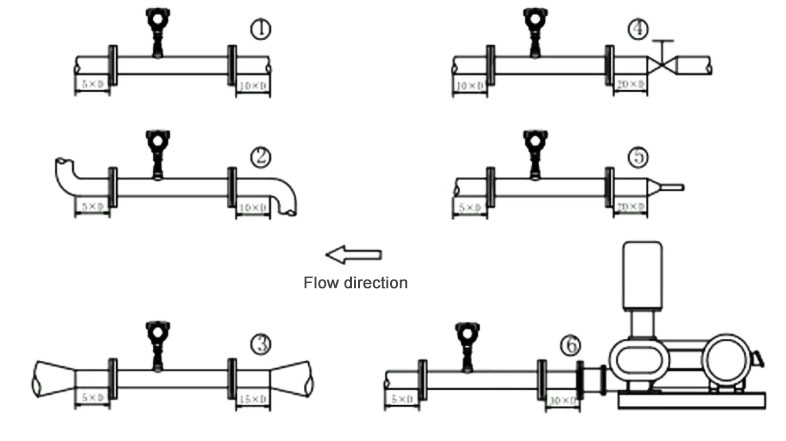
Stable airflow is essential for accurate measurement, and this is typically achieved by providing 10–15 pipe diameters upstream and at least 5 downstream of the meter. In retrofit projects where space is limited, it is common to use short-run capable meters or flow conditioners to help stabilize the flow before measurement.
Moisture and Contamination
Moisture is one of the most common causes of sensor issues, so flow meters are usually installed downstream of air dryers and filtration systems where the air is already conditioned. If liquid water is still present in the line, it can gradually affect measurement stability, particularly in thermal and ultrasonic applications.
Vibration
Vibration can introduce signal noise and long-term drift, especially in vortex and ultrasonic meters. For this reason, installation directly on compressor headers or flexible piping is generally avoided, and more rigid pipe sections are preferred for stable long-term performance.
Electrical
Reliable measurement also depends on proper electrical installation. Shielded cables are commonly used to reduce interference, and the supply voltage should always match the meter specification, typically 24V DC or 220V AC. In many installations, grounding the meter to the pipe system helps improve signal stability in practice.
Ongoing Performance
Flow meters do not require frequent maintenance, but they are not completely maintenance-free. Calibration is typically recommended every 12 to 24 months depending on application criticality. In systems with oil carryover, insertion probes should be inspected periodically, as buildup can affect accuracy over time, although simple cleaning is often sufficient to restore performance
Warm Tip: If the system cannot be shut down, use clamp-on ultrasonic meters because they can be installed without cutting the pipe or losing pressure, and can be moved if the position is not suitable.
Start with your measurement objective, not the meter technology. The right choice depends on what you are actually trying to achieve. For more detail, see our how to choose a compressed air flow meter guide.
Objective 1: Audit Total System Consumption
One or two thermal mass meters on the main header will give you 80% of the insight you need, quickly and cost-effectively. This is the right starting point for any facility with no metering currently in place.
Objective 2: Identify and Quantify Leaks
You need sub-zone metering with data logging, so you can compare overnight consumption against the daytime baseline. Any residual flow during non-production hours points directly to leakage. Thermal mass meters with pulse output work well here as they are easy to install at branch points and connect to a basic data logger.
Objective 3: Comply with ISO 50001 or Internal ESG Reporting
You will need calibrated meters with accuracy certificates traceable to national standards, plus integration with your energy management system. Confirm the meter outputs 4–20 mA or Modbus before ordering, as retrofitting the wrong output protocol is an avoidable cost.
Objective 4: Allocate Costs by Production Line or Department
Multiple insertion meters at branch points feed into a central data logger or building management system. Where taking a line offline is not possible, clamp-on ultrasonic meters remove the shutdown requirement entirely.
Objective 5: Monitor a Critical Process Parameter
In pharmaceuticals, semiconductor manufacturing, or precision assembly, invest in the highest-accuracy option available for that pipe size. Annual calibration with a traceable certificate is standard. Where a measurement fault could have serious downstream consequences, redundant measurement is worth the added cost.
If you are unsure where to start, begin with Objective 1. A single thermal mass meter on the main header costs relatively little and tells you quickly whether the system warrants further investigation.
Pipe size is the most practical filter in meter selection. The economics, installation method, and technology preference shift significantly as diameter increases.
| Pipe Diameter | Recommended Technology | Typical Configuration | Notes |
|---|---|---|---|
| DN15 – DN40 | Thermal mass, inline | Full-bore inline body, factory-calibrated as an assembly | Best accuracy at small diameters. Requires replacing a short pipe section during install. |
| DN50 – DN100 | Thermal mass, insertion | Probe inserted through a compression fitting or hot-tap | Most common configuration for branch metering. Minimal downtime if a hot-tap fitting is used. |
| DN100 – DN150 | Thermal mass or ultrasonic | Insertion thermal or clamp-on ultrasonic | Both technologies are viable here. If the line cannot go offline, clamp-on ultrasonic is the simpler option. |
| DN150 – DN300 | Ultrasonic, clamp-on or spoolpiece | Transducers clamped to outer pipe wall, or factory-built spoolpiece section | Ultrasonic becomes more cost-effective at this diameter. Zero pressure drop is an added advantage on large mains. |
| DN300+ | Ultrasonic, multipath | Multiple transducer pairs across a large cross-section | Single-path ultrasonic loses accuracy at very large diameters due to flow profile variation. Multipath units compensate for this. |
Between DN100 and DN150, insertion thermal meters remain accurate but the probe length increases with diameter, and achieving good averaging across a larger pipe cross-section becomes more difficult. If the pipe is also subject to variable flow profiles due to bends, valves, or T-junctions upstream, ultrasonic is the more reliable choice from DN100 onwards.
Differential pressure meters introduce permanent pressure loss that compounds over time. At DN100 running continuously, even 0.1 bar of additional pressure drop can add several hundred dollars annually to compressor energy costs. Thermal and ultrasonic meters avoid this entirely, which is worth factoring into any total cost of ownership comparison
Thermal mass meters measure the mass flow of compressed air and remain accurate under moderate line pressure fluctuations. Because gas density changes with pressure, very large or rapid swings can slightly affect readings. Installing an upstream buffer vessel can help smooth pressure and flow variations, ensuring consistent measurement accuracy.
Use inline meters for smaller pipes (DN15–DN40), and use insertion meters for larger pipes (DN50 and above) or retrofit applications where cutting the pipe is difficult. Insertion meters are easier to install with minimal disruption, though accuracy may be slightly lower than fully factory-calibrated inline meters.
Not directly, thermal mass meters are calibrated for a specific gas. If the application may switch to nitrogen or a mixed stream, specify a meter with user-selectable gas compensation or confirm a nitrogen-calibrated unit with your supplier.
Most meters output 4–20 mA, which connects to standard analog input cards. Newer units also support Modbus RTU or Profibus. Confirm protocol compatibility before ordering, it's easier to resolve at the specification stage than post-installation.
Compressed air measurement is not technically complex, but most systems remain unmeasured, which leads to unnecessary cost and lost efficiency opportunities. Installing a single main-header flow meter provides a baseline, from which losses can be identified and further metering justified.
Thermal mass flow meters are the most common starting point due to ease of integration and broad applicability across pipe sizes, while ultrasonic systems are preferred where non-intrusive installation or zero pressure drop is required.
If system constraints exist around pressure loss or shutdown, ultrasonic technology is often the most practical alternative.
Need help specifying the right meter for your system? Contact our applications team for selection based on pipe size, pressure, flow range, and output requirements.
we will contact you within 24 hours..
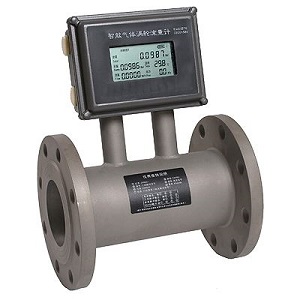 Industrial air flow meter
2019/06/20
We supply various industrial air flow meters, such as gas turbine flow meter, thermal mass flow meter, vortex flow meter at different price cost and functions.Compressed air is a very useful part of m...
VIEW
Industrial air flow meter
2019/06/20
We supply various industrial air flow meters, such as gas turbine flow meter, thermal mass flow meter, vortex flow meter at different price cost and functions.Compressed air is a very useful part of m...
VIEW
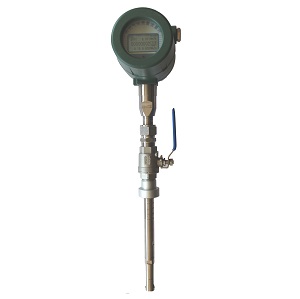 SCFM air flow meter
2019/06/20
Thermal mass flow meter with digital display to show air instant flow and air total flow:Instant flow units available :SCFM,g/min,g/s,Kg/min,Kg/h,Nm3/h,Nm3/min,NL/h,NL/min,Total flow units available:...
VIEW
SCFM air flow meter
2019/06/20
Thermal mass flow meter with digital display to show air instant flow and air total flow:Instant flow units available :SCFM,g/min,g/s,Kg/min,Kg/h,Nm3/h,Nm3/min,NL/h,NL/min,Total flow units available:...
VIEW
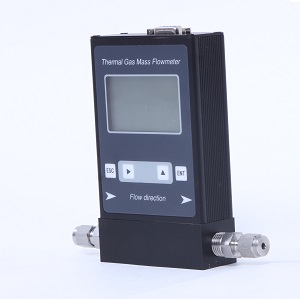 Micro air flow meter
2019/06/20
Micro-flowrate thermal dispersion flow meter is designed on the basis of thermal dispersion, and adopts method of constant differential temperature to measuring air at very low flow. It has advantages...
VIEW
Micro air flow meter
2019/06/20
Micro-flowrate thermal dispersion flow meter is designed on the basis of thermal dispersion, and adopts method of constant differential temperature to measuring air at very low flow. It has advantages...
VIEW
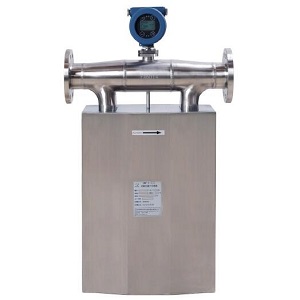 4 inch coriolis flow meter
2019/06/20
4 inch size Coriolis Mass Flow Meter is operated with Coriolis Force Principle. 4” Coriolis flow sensor is relative large size, and the flow meter is really bulky. It is widely used for accurate mass....
VIEW
4 inch coriolis flow meter
2019/06/20
4 inch size Coriolis Mass Flow Meter is operated with Coriolis Force Principle. 4” Coriolis flow sensor is relative large size, and the flow meter is really bulky. It is widely used for accurate mass....
VIEW
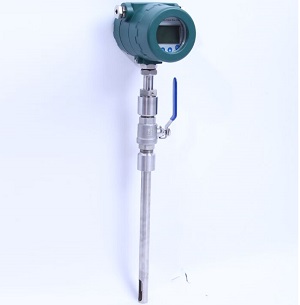 Insertion air flow meter
2019/06/20
Thermal mass flow meter is a suitable type insertion air flow meter which can detect air or compressed air flow rate in a closed pipeline or duct. Insertion style thermal dispersion flow meter is for...
VIEW
Insertion air flow meter
2019/06/20
Thermal mass flow meter is a suitable type insertion air flow meter which can detect air or compressed air flow rate in a closed pipeline or duct. Insertion style thermal dispersion flow meter is for...
VIEW
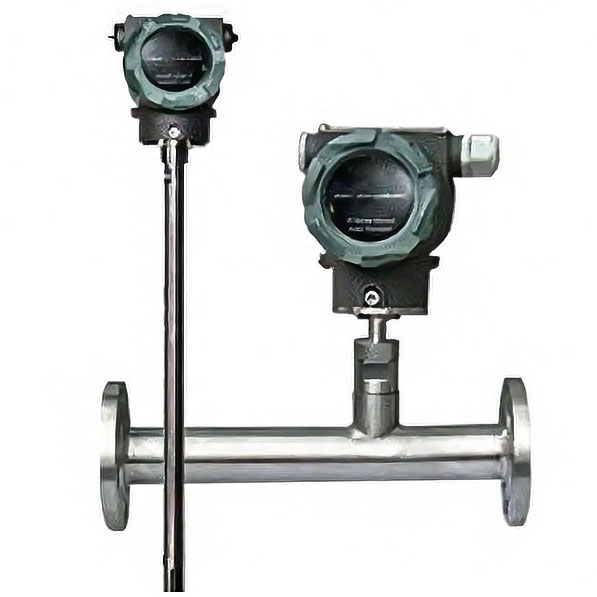 High temp air flow meter
2019/06/20
For max 350°C (662°F) high temperature. For combustion air or exhaust air. Low pressure air flow measurement. For square duct or pipelines.
VIEW
High temp air flow meter
2019/06/20
For max 350°C (662°F) high temperature. For combustion air or exhaust air. Low pressure air flow measurement. For square duct or pipelines.
VIEW
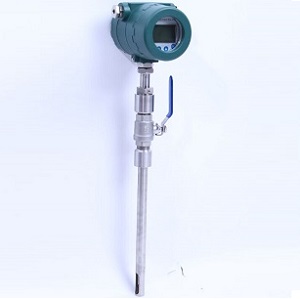 Insertion type thermal mass flow sensor
2019/06/20
Insertion gas flow sensor and easy install. Low cost meter for large pipeline. Factory thermal mass flow meter price For large pipe or rectangular duct or stacks.
VIEW
Insertion type thermal mass flow sensor
2019/06/20
Insertion gas flow sensor and easy install. Low cost meter for large pipeline. Factory thermal mass flow meter price For large pipe or rectangular duct or stacks.
VIEW
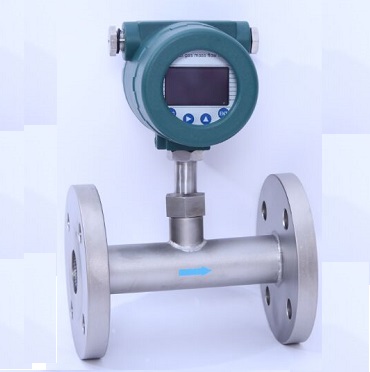 In-line air flow meter
2019/06/20
Air flow rate measurement, also compressed air is vital demand in many factories, industry, lab, facilities.We, Silver Automation Instruments, have in-line air flow meters for sale, we have low price...
VIEW
In-line air flow meter
2019/06/20
Air flow rate measurement, also compressed air is vital demand in many factories, industry, lab, facilities.We, Silver Automation Instruments, have in-line air flow meters for sale, we have low price...
VIEW
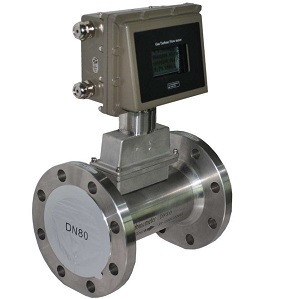 Gas Turbine Flow Meter with Temp & Press. compensation
2019/06/20
SGW-D series Gas turbine flow meter can be used to measure clean air or gas, such as natural gas, nitrogen gas.,etc. The best part of SGW series is that it can have integral temperature and pressure c...
VIEW
Gas Turbine Flow Meter with Temp & Press. compensation
2019/06/20
SGW-D series Gas turbine flow meter can be used to measure clean air or gas, such as natural gas, nitrogen gas.,etc. The best part of SGW series is that it can have integral temperature and pressure c...
VIEW
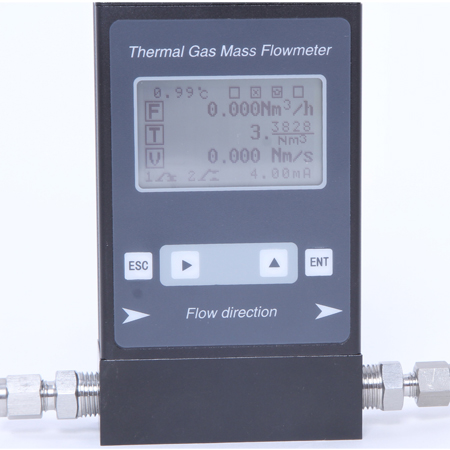 Micro-Flowrate Thermal Mass Flow Meter
2019/06/20
Micro-flowrate Thermal mass flow meter for DN3-DN10, Small flow meter for air ,LPG,biogas ,natural gas.etc
VIEW
Micro-Flowrate Thermal Mass Flow Meter
2019/06/20
Micro-flowrate Thermal mass flow meter for DN3-DN10, Small flow meter for air ,LPG,biogas ,natural gas.etc
VIEW
 Vortex Flow Meter
2019/06/20
Vortex Flow meter is for clean liquid, gas and steam flow measurement. Contact us to choose proper type flow sensor and get the competitive quotation.
VIEW
Vortex Flow Meter
2019/06/20
Vortex Flow meter is for clean liquid, gas and steam flow measurement. Contact us to choose proper type flow sensor and get the competitive quotation.
VIEW
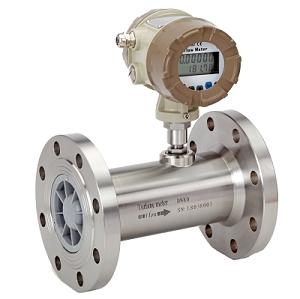 Gas Turbine Flow Meter
2019/06/20
Robust Gas flow meter for natural gas,LPG,biogas flow measurement.Inquiry Gas TUF Flowmeter price with EVC directly from China manufacture.
VIEW
Gas Turbine Flow Meter
2019/06/20
Robust Gas flow meter for natural gas,LPG,biogas flow measurement.Inquiry Gas TUF Flowmeter price with EVC directly from China manufacture.
VIEW